Related Articles

On the back of a strong momentum, Bitcoin rallied to $76,000 in March and was placed for its first bullish monthly close in half – if it had been trading at that time. Nevertheless, that story has since been unraveled as it is now the case of .
Amid geopolitical developments involving the U.S in early optimism, fuelled by early hope for economic growth, has been driven by some of the most recent advances that have come to be seen as an early sign of early confidence from those who are involved with this term “The United States.” S, Iran and Gulf states have adapted to macro-driven caution. Bitcoin [BTC] trading near $66,126 at the time of writing was holding key levels but showing signs of vulnerability as sentiment shifts shifted.
Bond yields climb, tightening the screws
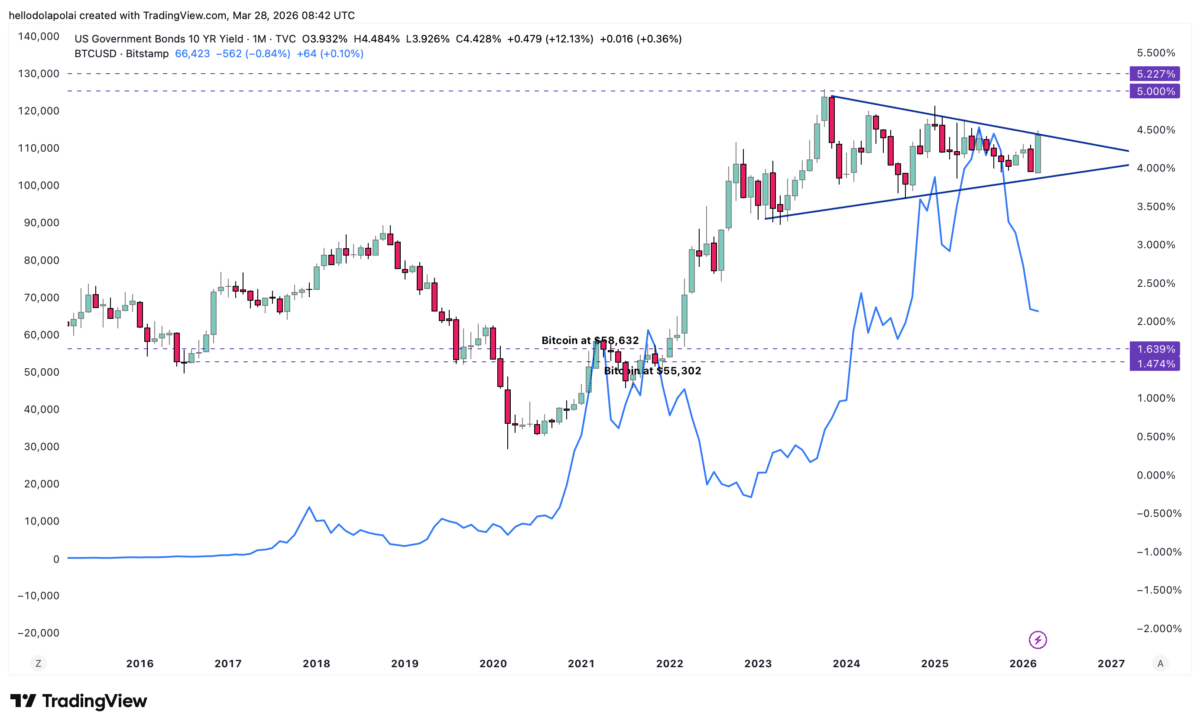
The U.S. . Market directions have now been driven by a central driver of market direction has been S 10-year Treasury yield. However, the price action on press time seemed to suggest that a yield could be strengthening within an aggressive bullish flag pattern — usually as precursor to more upside.
An official crackdown could push yields towards the 5 with a potential pull on them. A 0% level or higher, revisiting highs from 2023 to date. If such a move would likely help accelerate capital rotation out of risk assets, it would be more likely to take place faster than .
High yields tend to increase the appeal of fixed-income instruments, excluding liquidity from speculative markets. The trend, which has historically been interpreted as downside pressure for Bitcoin, has also traditionally translated into the dynamic of this dynamic to be used in order to define bitcoin’s value.
Source: TradingView
Source: TradingView
Similarly, yields increased from 1–2 October 2021 to December 2022. 4–5 per cent to 3. 90% . All while Bitcoin went from $67,000 to $16,256 over the same period.
If yields extend towards 5%, Bitcoin could retrace towards its next demand zone between $58,632 and $55,302.
ETF flows flip as U.S investors de-risk
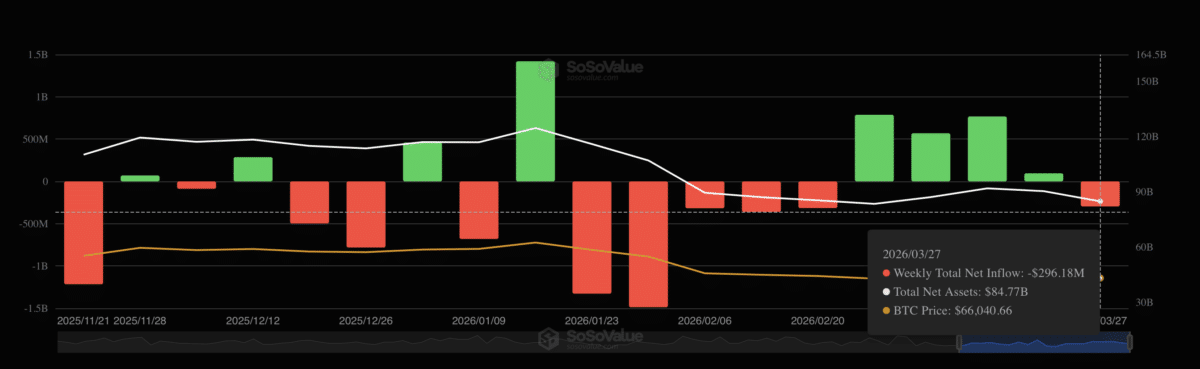
U.S. institutional sentiment in the. S is beginning to suck too much, . Moreover, Spot Bitcoin exchange-traded funds have recorded their first meaningful outflows in five weeks – signaling a shift towards ‘risk-off posture’.
About $296 million stepped out of these funds over the past week, with part of the $2 being reversed. During the last four weeks there were 12 billion pile ups of s over the past four week. But the shift suggested that new buyers may be starting to unwind positions as macro risks grow stronger, implying that they are beginning to take on jobs.
Source: Sosovalue
Source: Sosovalue
It reflected the best trend of s in late-February data. Outflows reached around $396 between 26-27 February alone. 7 million, highlighting how quickly sentiment can be reversed.
With only a few trading sessions left in March, sustained selling could now cement the bearish monthly close.
Oil surge fuels inflation concerns
Hence, the backdrop of inflation is still one of the central variables here. The price of Crude oil has soared, adding pressure to an already fragile macro environment that is under threat from crude prices.
By the beginning of the month Brent crude has already risen from around $75 to roughly $16 while WTI crude was trading near $101 at press time. The movement suggested that the move was related to supply disruptions and geopolitical tensions, both of which are threatening maintaining inflation at high levels.
Persistently high energy prices limit the likelihood of near-term monetary easing, keeping yields elevated and financial conditions tight.
Indeed, new research cited oil-driven inflation as the “headwind” for Bitcoin in particular amid disruptions associated with the Strait of Hormuz. While market analysts say Bitcoin may be a hedge, the price action today suggests it is closely tied to more liquid liquidity conditions.
Final Summary
- The U.S 10-year Treasury yield is approaching a breakout, raising the risk of a broader market repricing.
- U.S investors have begun offloading Bitcoin, as oil-driven inflation continues to complicate the macro outlook.
Thanks for reading Is Bitcoin’s price at risk of $58K after US 10-year yields near 5% oil-driven inflation