Related Articles
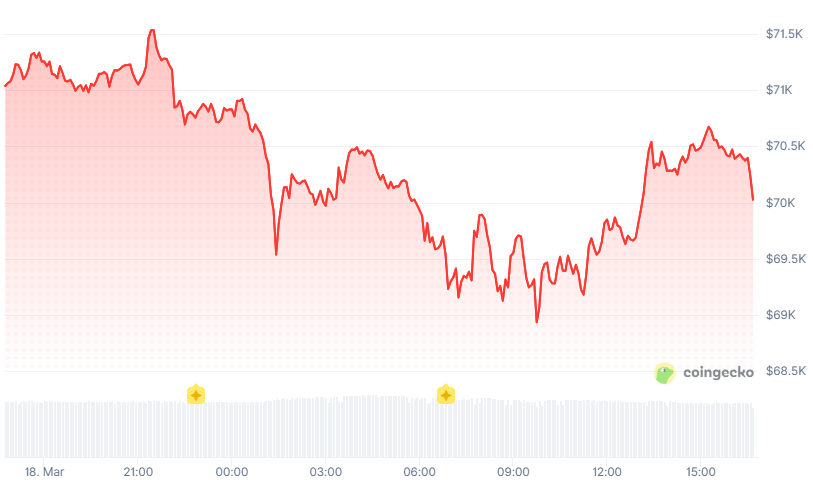
But **Crypto treasury companies are under growing financial pressure following the fall of Bitcoin and Ethereum nearly 30% in just over a week, eliminating an estimated $25 billion in unrealized value across digital asset balance sheets. ** **
No one currently own assets above their average cost, according to data tracking public crypto treasury firms. Gleichzeitig, the sharp drawdown has also taken most treasury strategies into loss territory, raising questions about liquidity, financing and long-term viability.
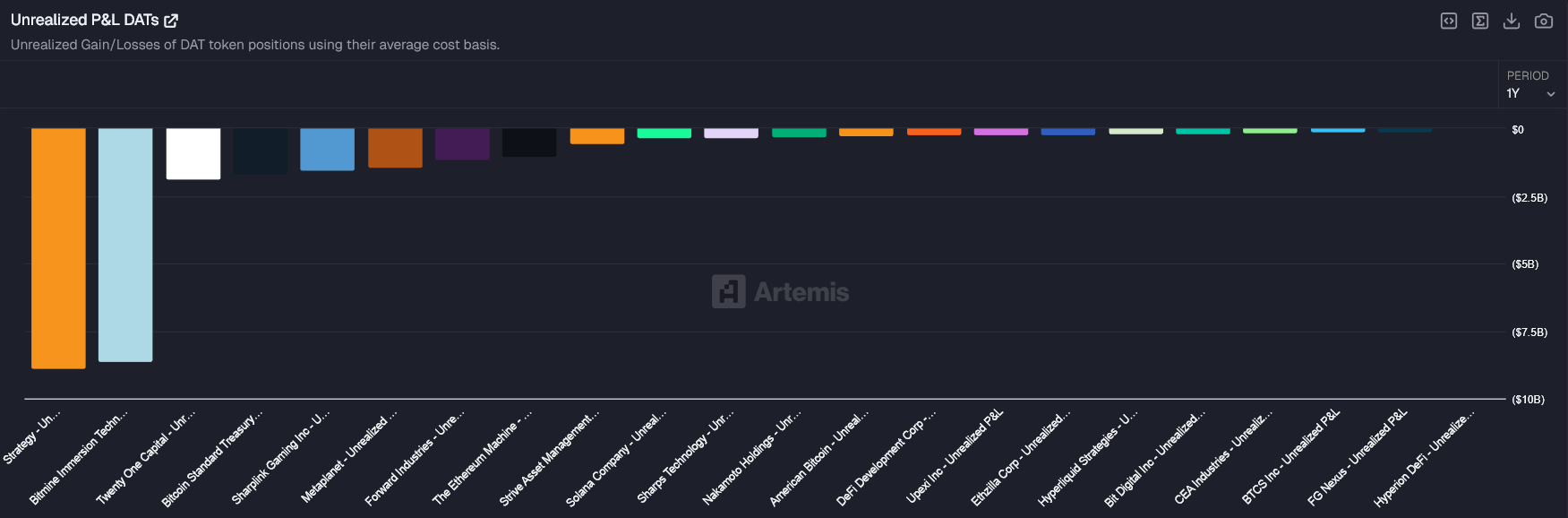
Unrealized Profit and Loss of Digital Asset Treasuries. Source: Artemis
Losses Spread Across the Entire Digital Asset Treasury Sector
The sell-off hit treasury-heavy firms simultaneously.
The largest holders recorded the most serious paper losses, dragging cumulative unrealized P&L sharply negative. While the losses are unrealistic, it is a scale issue because it weakens balance sheets and equity valuations.
As a result, the market has shifted from rewarding crypto accumulation to pricing survival risk.
Market Premiums Have Collapsed
A key stress signal is the collapse in market net asset value (mNAV), comparing a company’s equity valuation to the value of its crypto holdings.
In a number of large treasury companies, below an mNAV of 1 is now traded; the market values their equity at ‘an affordable price to assets they own. It also eliminates the ability to raise capital efficiently by equity issuance without dilution, which is not possible under this.
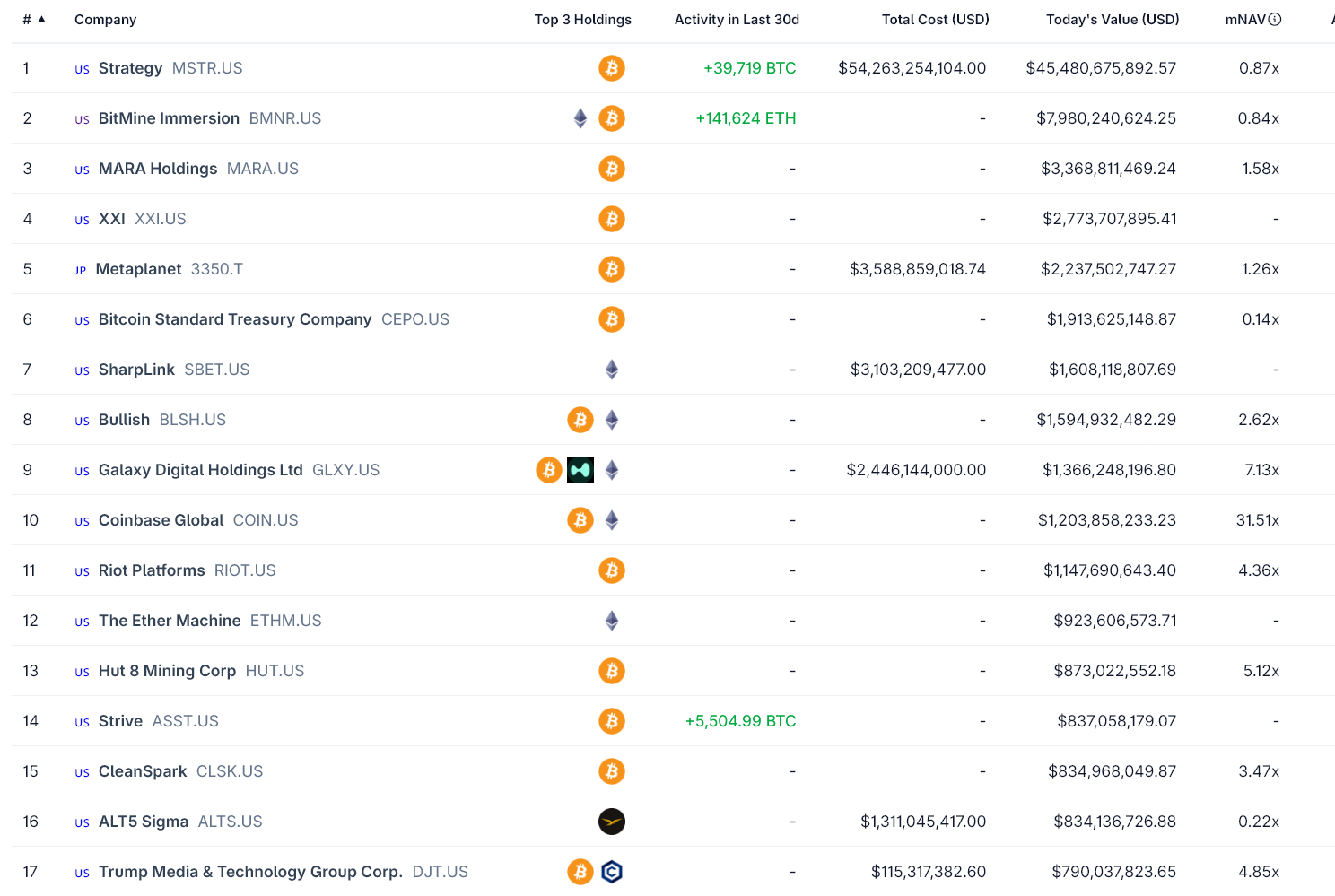
mNAV Falls Below 1 For Most Crypto Treasuries. Source: CoinGecko
MicroStrategy, one of the largest corporate Bitcoin investors in crypto with tens of billions-dollar assets holding up to its asset value, trades below its Asset Value.
That discount limits its flexibility to fund further purchases or refinance cheaply.
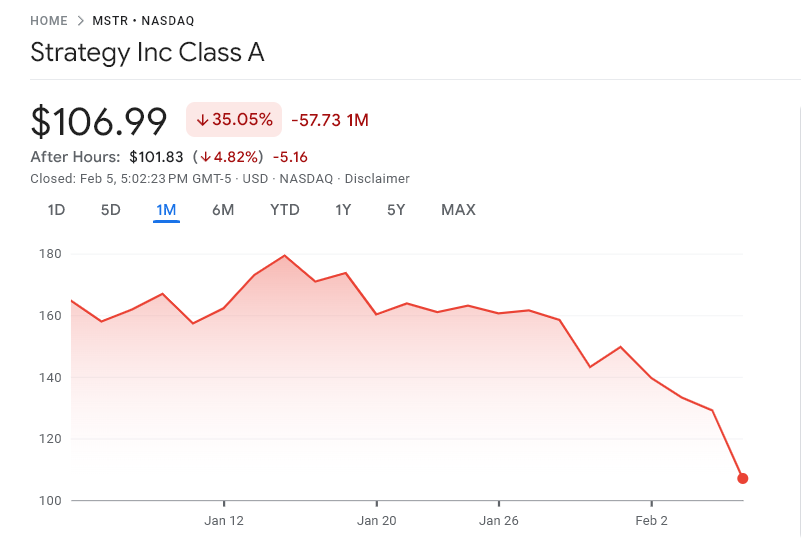
MicroStrategy Shares Lost 35% in a Month. Source: Google Finance
Liquidity Drives Bankruptcy Risk
No bankruptcy is a result of unrealized losses alone. If the risk increases when falling asset prices collide with leverage, debt maturities or ongoing cash burn?
It is the most exposed exposure to mining companies and treasury vehicles that use outside funding. Crypto prices are depressed, lenders may tighten terms, equity markets were closed and refinancing options could narrow down.
This creates a feedback loop. Lower prices reduce equity value, which limits capital access and increases pressure on balance sheets.
A Stress Phase, Not a Collapse
The current drawdown reflects forced deleveraging and tighter financial conditions rather than a failure of crypto assets themselves.
However, if prices fail to recover and capital markets remain restrictive, stress could intensify.
For now, crypto treasury firms remain solvent. But the margin for error has narrowed sharply.
Thanks for reading Most Crypto Treasuries Face Rising Bankruptcy Risk After Market Crash
