Related Articles
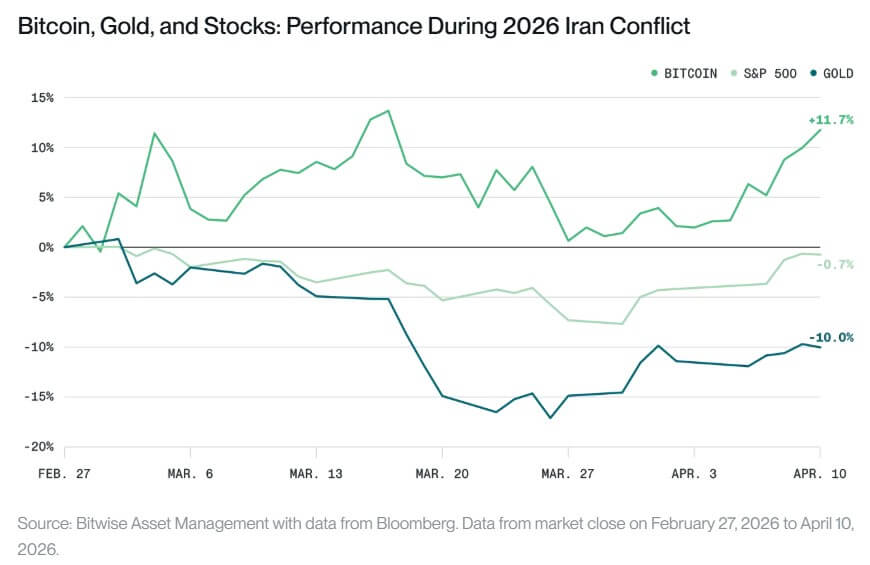

But investors that live in the wild price swings of bitcoin could be a disappointed investor. A market that has already been significantly calmer in recent years is facing much more volatility, with major banks preparing to introduce new products which could help reduce the risk of this.
Goldman Sachs applied for a Bitcoin Premium Income exchange-traded fund (ETF) most recently. The underlying fund is based on selling (writing) alternatives tied to bitcoin-related exchange traded products in order for income while giving investors access to the cryptocurrency. BlackRock is now looking to launch a similar product with .
It is essentially writing insurance against price swings to sell options. The authors owe a premium to the writers for offering downside or upside protection, but are subject to significant losses if the market moves sharply and may be at risk of major loss? Many traders use covered strategies holding the same asset or ETFs when writing options — to partially offset risk.
The ETFs, if approved, may use similar covered options strategies to generate yield (although the exact structures will vary depending on product) and other methods.
In any case, the net effect would be calmer market conditions. When options are sold in large numbers, dealers or market makers who take the other side of these trades end up with long positions. Such companies then dynamically hedged by buying the underlying asset on declines and selling on rallies to manage their risks. It calls this dynamic hedging the positive gamma exposure, and it also restrains volatility.
However the availability of institutional-grade products that generates yield may also suck capital away from pure bets, further decreasing realized volatility over time. Since the last three years, Bitcoin’s implied volatility has been declining largely because options-selling strategies are increasingly popular with investors.
The highs were close to $76,000 on Tuesday and it’s a drop of $74,000 for today bitcoin, which has returned to the $744,000 mark. Over 1% of its 24 hours in one day, the CoinDesk 20 Index has fallen more than a percent.
A firm breakout is expected to happen if the U.S. stock indexes hit new record highs.
If Bitcoin is looking for external signals, it may remain indecisive until key US stock indices hit new highs. Yet we tend to think that the stalemate of the first cryptocurrency is a sign of ‘a fragile risk appetite which will soon be in the wider market’, Alex Kuptsikevich, chief market analyst at the FxPro said in an email.
Meanwhile the IMF issued a warning on rising global debt, strengthening bull case in bitcoin. Alert yourself Stay alert!
See Crypto Markets Today for analysis of today’s activity in altcoins and derivative, **Read more ** Read. See CoinDesk’s “Crypto Week Ahead” for a full list of events this week. *****
What’s trending
Hormuz standoff chokes oil flows (Bloomberg) President Donald Trump re-intentionally declined the prospect of renewed fighting in Iran, even as questions remain over Tehran’s nuclear program and access to the Strait of Hormatu Z.
Investors look beyond war (The Wall Street Journal) U.S. Nasdaq logs longest winning streak since 2021. A , S. Nasdaq Composite index is adding 14% over 10 sessions as strong corporate earnings outweighed war risks, and markets are reviving; the Nassaquic Index has been up for sale by 11 per cent of its market participants. Wall Street banks had high trading profits posted by Wall street banks. The AI computing-power arms race is helping Tech stocks.
The high-yield stock (CoinDesk) is being formed around Strategy’s crypto treasury companies A new class of crypto ‘treaturing’ stocks are emerging around STRC, which has grown in numbers and decentralized finance protocols buying it to capture the yield while indirectly exposure to bitcoin.
Today’s signal
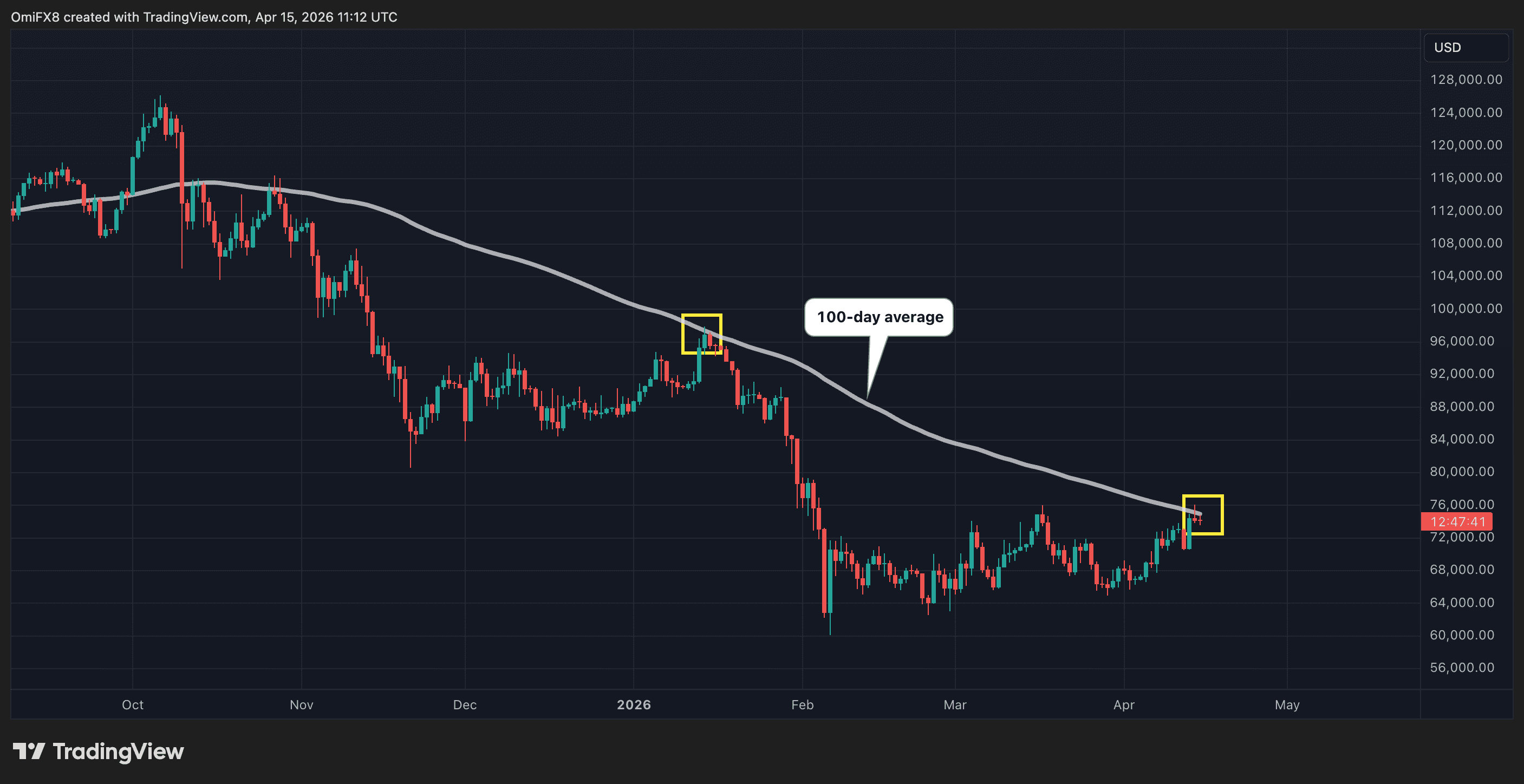
Despite its 100-day simple moving average, Bitcoin is struggling to get past its most popular technical level that shows the average closing price during this time.
This idiosyncratic pattern is similar to mid-January, when sellers took over at the 100-day average and stopped recovering. Bitcoin suffered a sharp decline in the days following, according to .
The question is now whether history will repeat itself, or if this time the level finally goes down and that means faster gains to $80,000 and higher.
Thanks for reading Income ETFs could be bitcoin’s volatility kill switch
